Mount Tavurvur, the Smoking Guardian of East New Britain

Mount Tavurvur (223 m) rising over Blanche Bay, standing guard at the eastern tip of East New Britain
At the break of dawn in East New Britain, three companions set out to climb one of Papua New Guinea’s most iconic volcanoes. Between steaming hot springs, the haunting silence of a crater, and the laughter of children in nearby villages, this immersive journey to the summit of Tavurvur reveals much more than just geological wonders—it speaks of resilience, memory, and the powerful bond between land and people.
June 11, 2025 – 5:00 a.m. The alarm rings. A sharp, shrill noise that cuts through the dense night. I open one eye. Everything is dark. Everything is still. A moment of hesitation. My arm stretches out blindly and slams the alarm off. I want five more minutes—just five... But no. Today, we're climbing Tavurvur. No time to dawdle.
I get out of bed and dress mechanically. A strange tension builds in my chest—a mix of apprehension and excitement. I’ve seen this volcano in photos, heard about it dozens of times, even almost climbed it three years ago on my birthday—but it didn’t happen. Today, I’ll finally feel it tremble beneath my feet.
The 4x4 roars to life. I try to steal a few more minutes of sleep, dozing with my head against the window, despite the road bumps. My two companions, Luis and Pascal, remain silent. No need for words—the adventure has already begun.
As we pass through Kokopo, then Rabaul, the sky lightens in the east. A gray light gradually reveals the scars of a tumultuous past—abandoned buildings, deformed roads, omnipresent dust. This land is raw, wounded. The eruptions of 1994 and 2014 left visible scars everywhere.
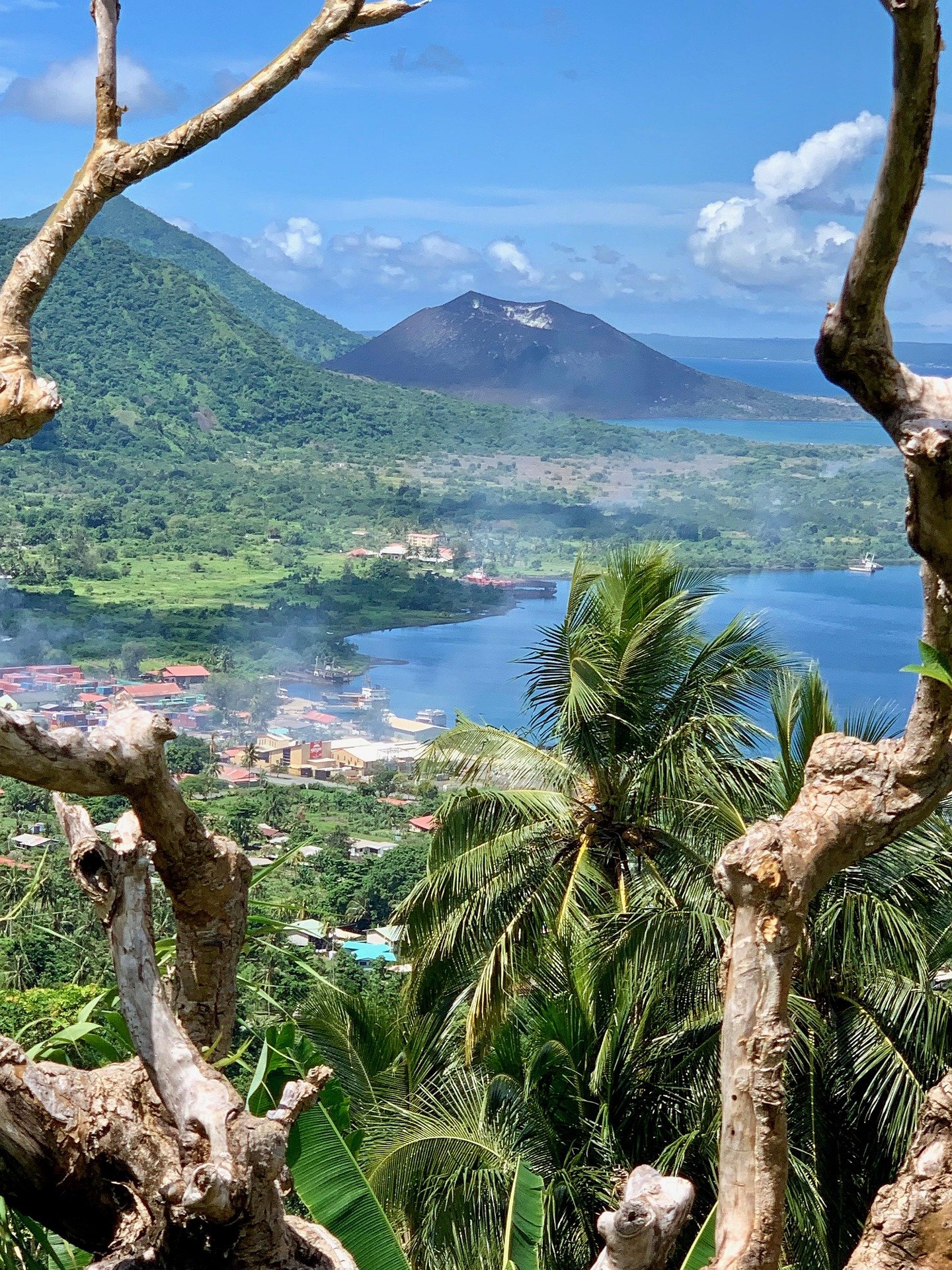
View of the caldera from the Rabaul Observatory, with a few houses rebuilt at its foot after the lava flow that preceded the destruction of Rabaul in 1994
I recall what Roger, our guide, and his loyal sidekick (and brother-in-law), Jackson, told us on our first day as we looked over the caldera from the Rabaul observatory:
“See that ridge line over there? That’s the Vulcan. In 1994, it erupted at the same time as Tavurvur. Two monsters waking up together. The town didn’t stand a chance.”
Their tone was calm, almost reverent. As if they were speaking of old gods.
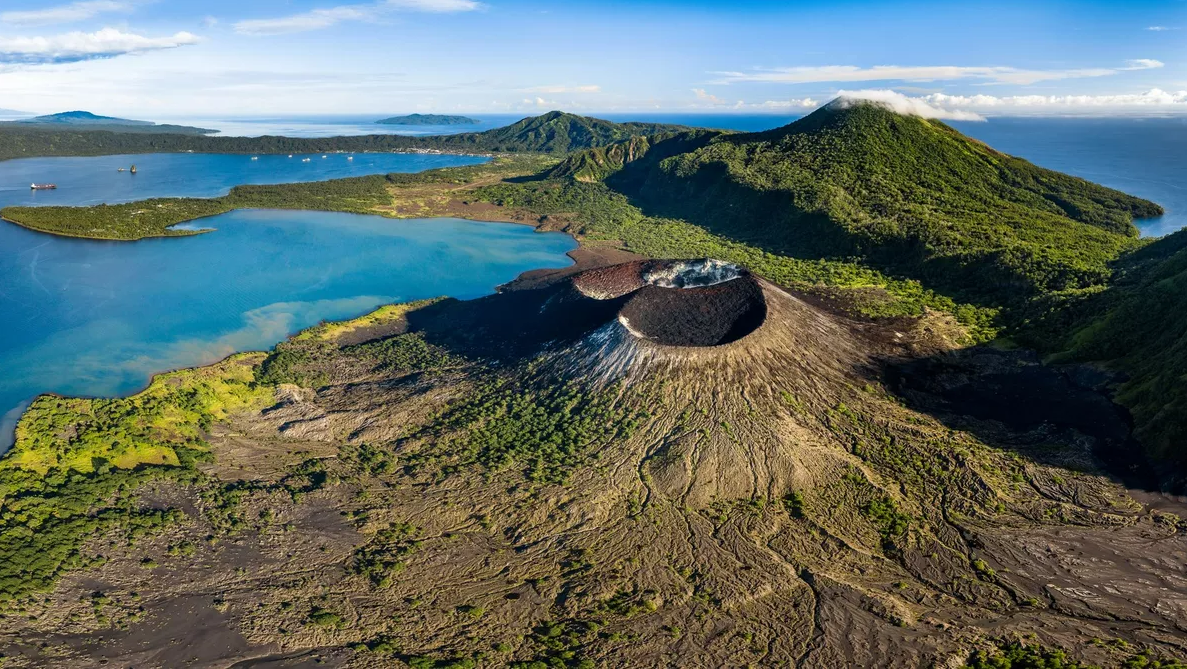
Looking out over Mount Tavurvur
We leave the paved road. The ground turns black, crunching beneath the tires. The 4x4 stops near a steaming stream.
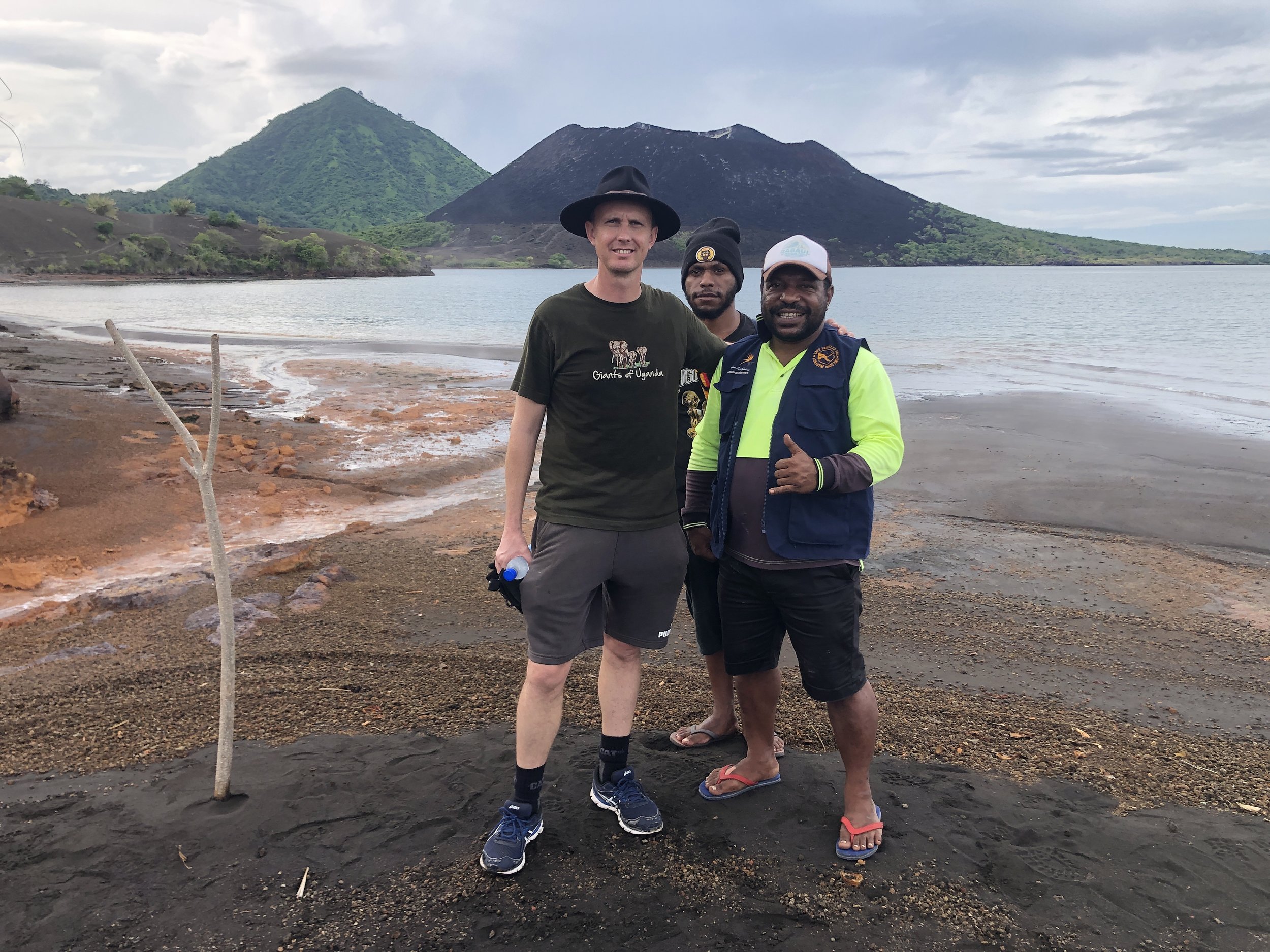
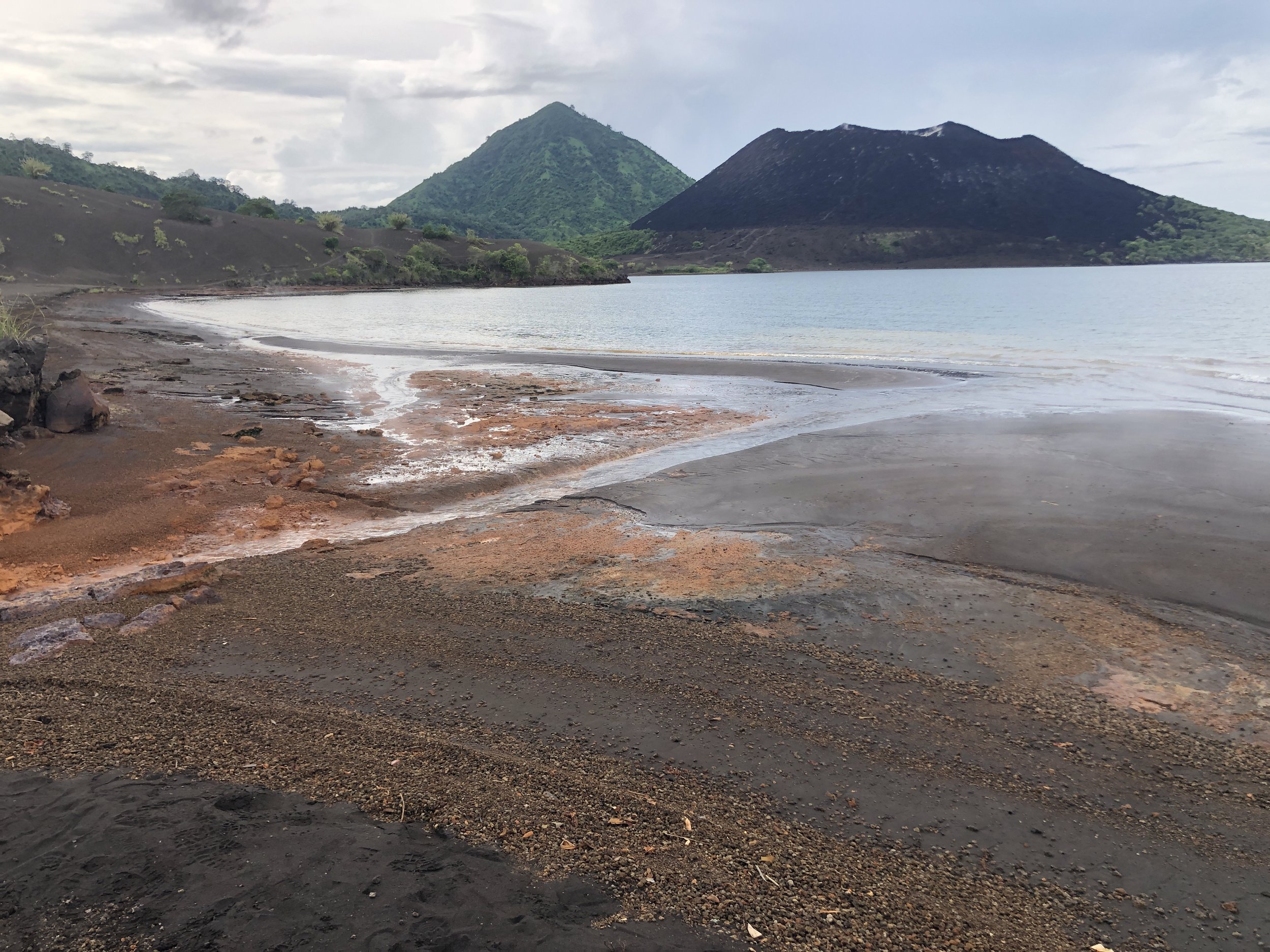
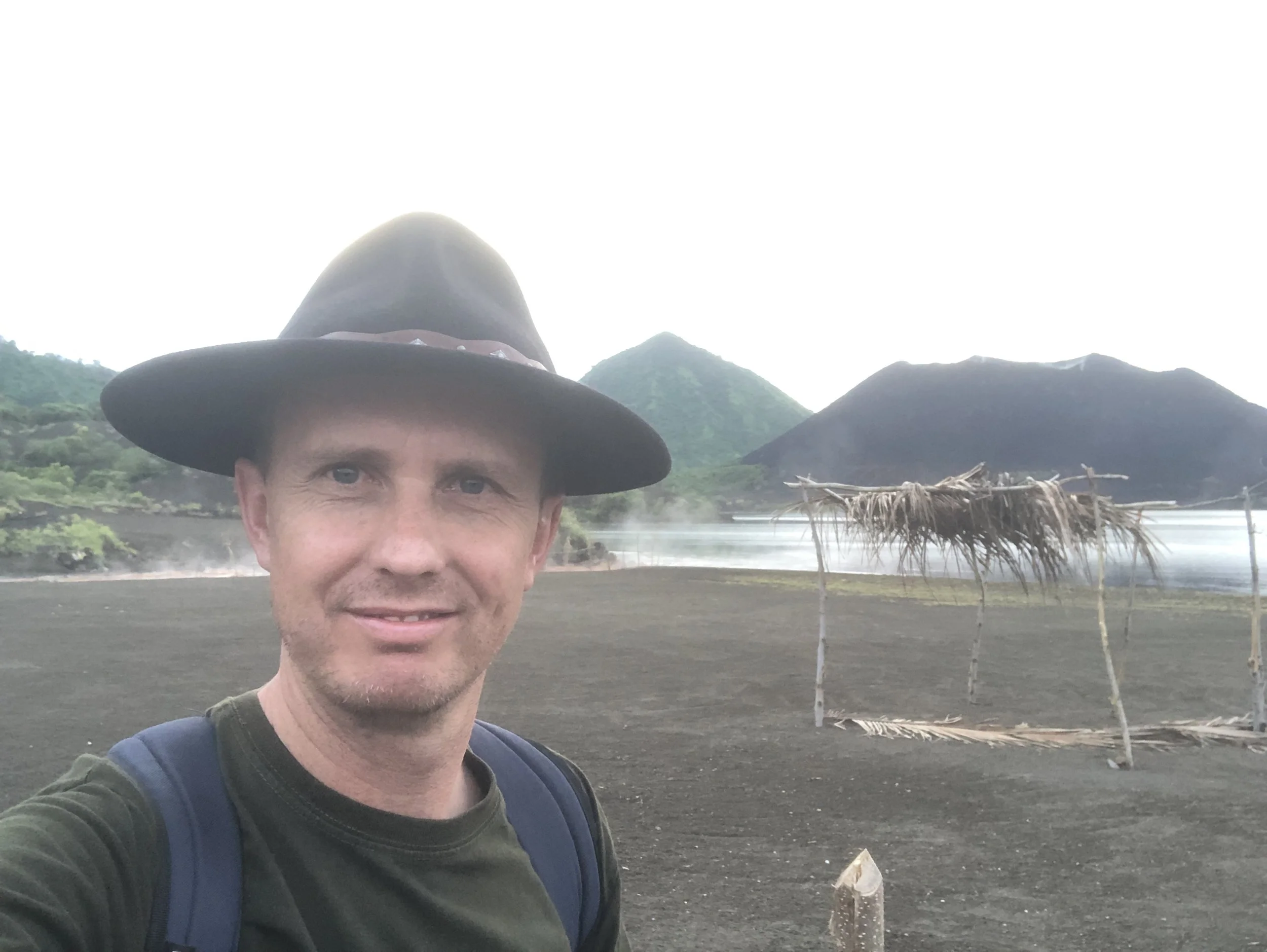
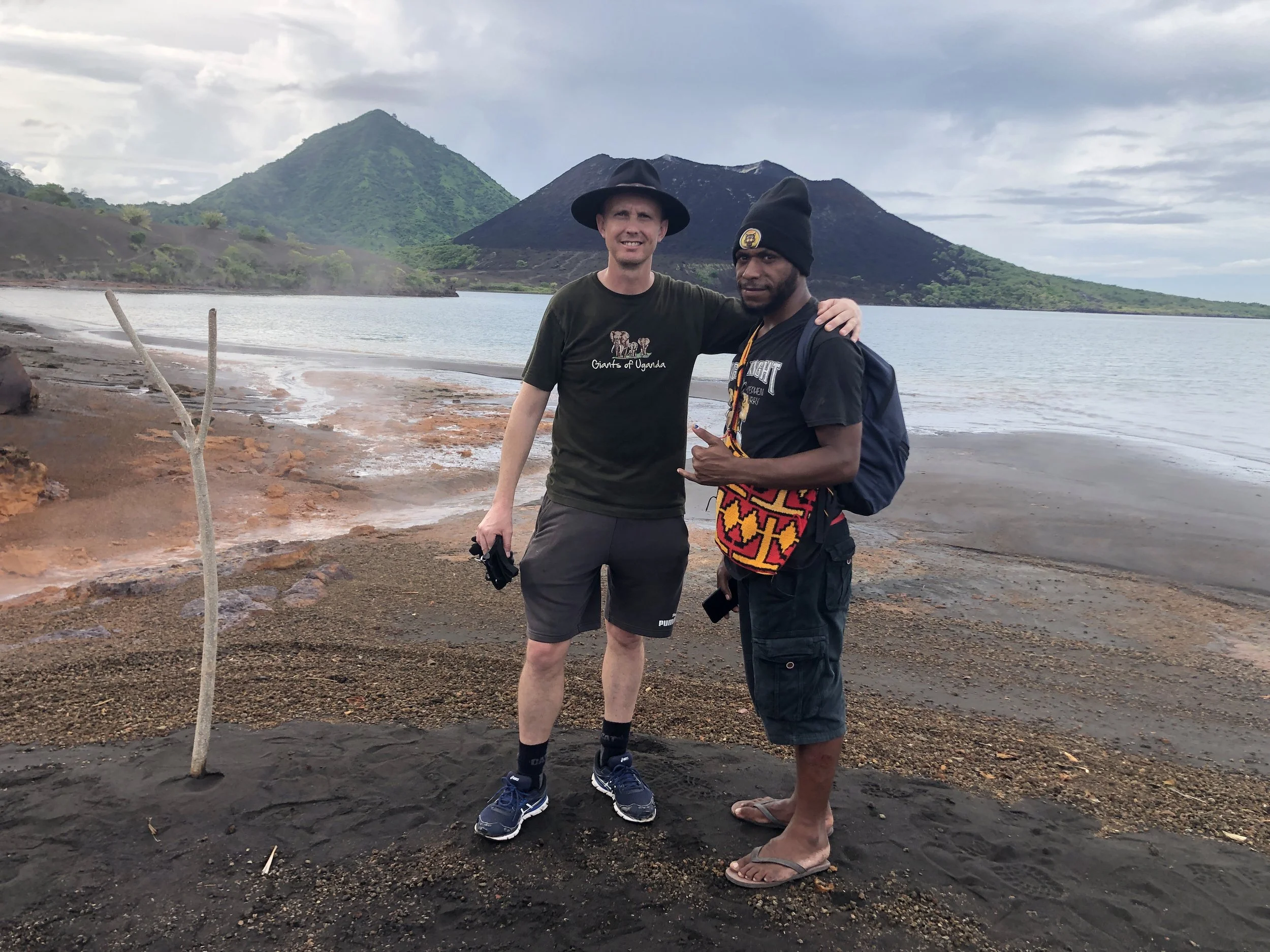
“Hot Springs,” I announce proudly as I jump out of the vehicle. Oh yes, I remember this well. My wife and I came here with the kids in June 2022. They’ve put up barriers now to prevent people from falling in—you’d come out with serious burns. Not everyone’s meant to end up like a boiled crayfish.
White steam rises in swirling wisps. I approach the stream. Bubbles pop on the surface. If you dropped an egg in there, it would cook in under two minutes.
“Sometimes we do that with tourists,” Jackson adds with a smile. “A geothermal omelet.”
It might be eco-friendly... but it's still kind of creepy.
There’s something intimidating about the calm, the heat seeping from the ground, the acidic smell of sulfur. It’s beautiful, yes. But far from comforting.
I look up. Tavurvur towers above, massive, black, jagged like a fang plunged into the sea. Its silhouette is familiar to Papuans and to the few adventurous expats. But in real life, it feels more alive—more menacing.
“It’s a small volcano,” says John, our guide for the day. “Only 223 meters. But it’s got a bad temper.”
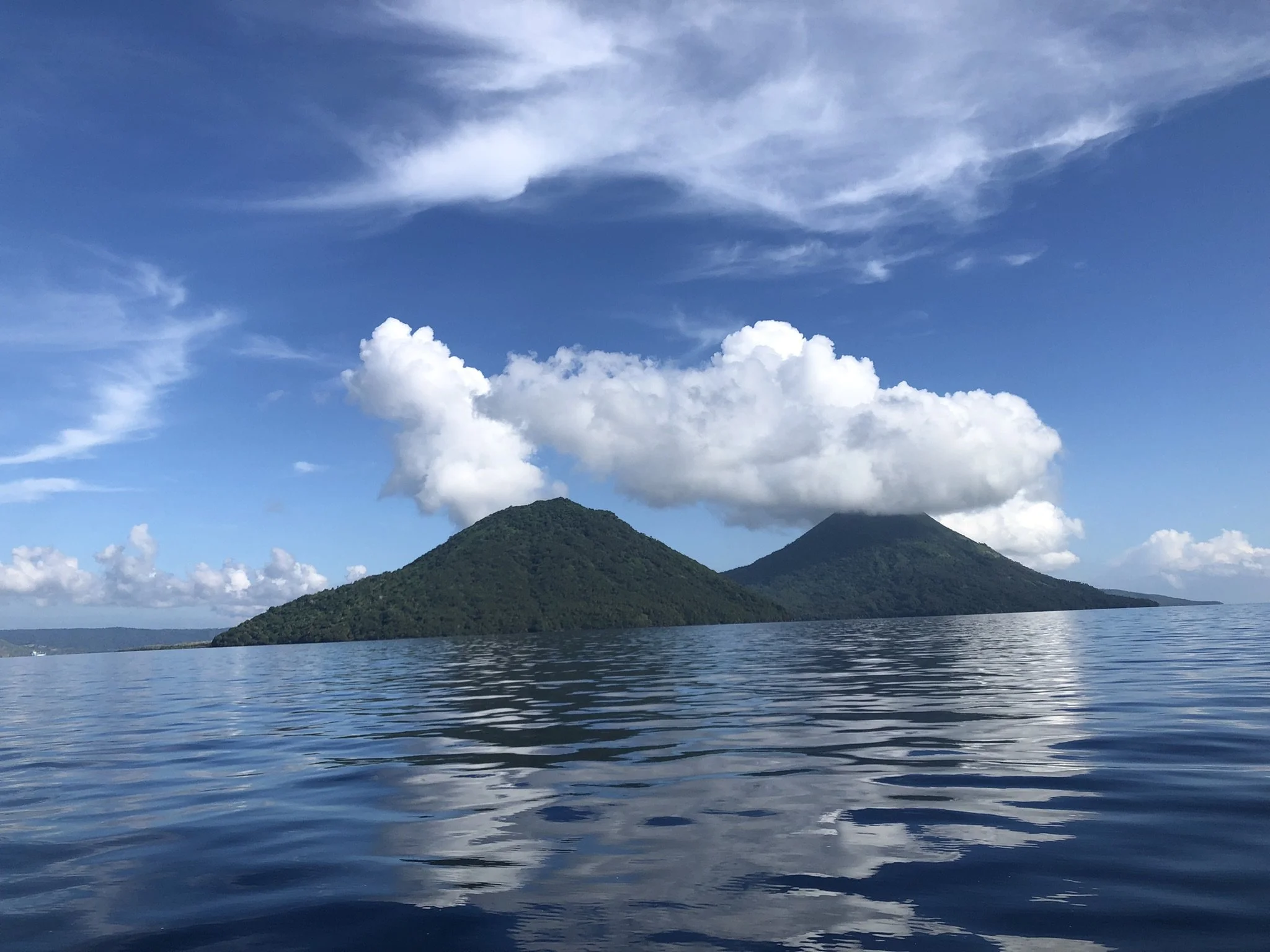
Mount Kombiu (“The Mother”) and Turangunan forming a sacred backdrop over Blanche Bay
In the background, Mount Kombiu (called The Mother) and Turangunan complete the scene. One is broad, ancient, cloaked in greenery; the other more discreet, almost shy. Together, they form a sacred triangle, standing watch over Blanche Bay.
I turn to Pascal and Luis.
“Alright. Ready?”
“Let’s do it,” says Pascal. “No more hesitating. I signed up for this climb, I’ll see it through—and tomorrow I’ll find out whether my knees made it through.”
I admire that brave spirit. Mind over matter. Thankfully, his knees held up in the end.
We start climbing the volcano’s flank. There’s no trail—just a faint path winding between volcanic bombs, oddly-shaped rocks, and frozen lava flows. The ground is loose, uneven, colored black and red. Every step requires balance.
“Follow my steps,” says John. “The terrain changes quickly here.”
I nod. My breathing shortens. The heat intensifies as we climb and the sun beats down harder. Every so often, we take a break. We’ve agreed to try and reach the summit together, to witness the crater as one.
Below us, Simpson Harbour opens up—majestic. A vast deep-blue lagoon framed by green cliffs. In the middle, two rocky formations rise like teeth: the Dawapia, or Bee Hives.
“Like tropical Étretats*,” I think.
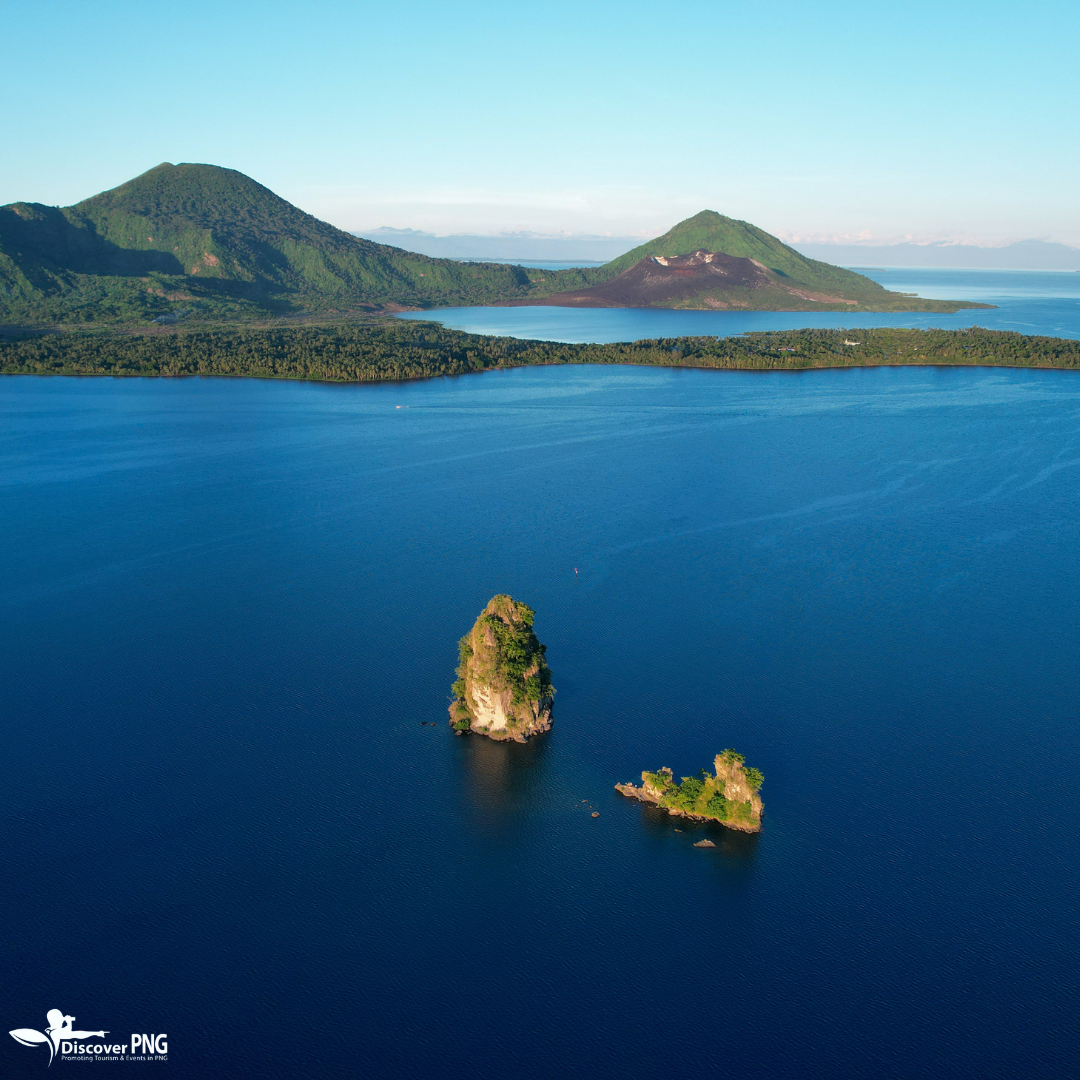
The Dawapia “Bee Hives” rising like twin stone teeth in the heart of Simpson Harbour
From above, Simpson Harbour makes perfect sense. A natural shelter. Deep waters from the shore. A narrow entrance. Protected from wind. Invisible from the sea. No wonder the Japanese made it their military base in 1942 to launch their attacks on Papua and beyond, toward Australia.
I think of the 65 Japanese wrecks sleeping beneath the surface. Of the history this volcano has witnessed. And of that strange blend of wonder and threat that hangs in the air.
As we reach the summit, the wind dies. Everything is still. Except a faint whistling—birdsong, perhaps.
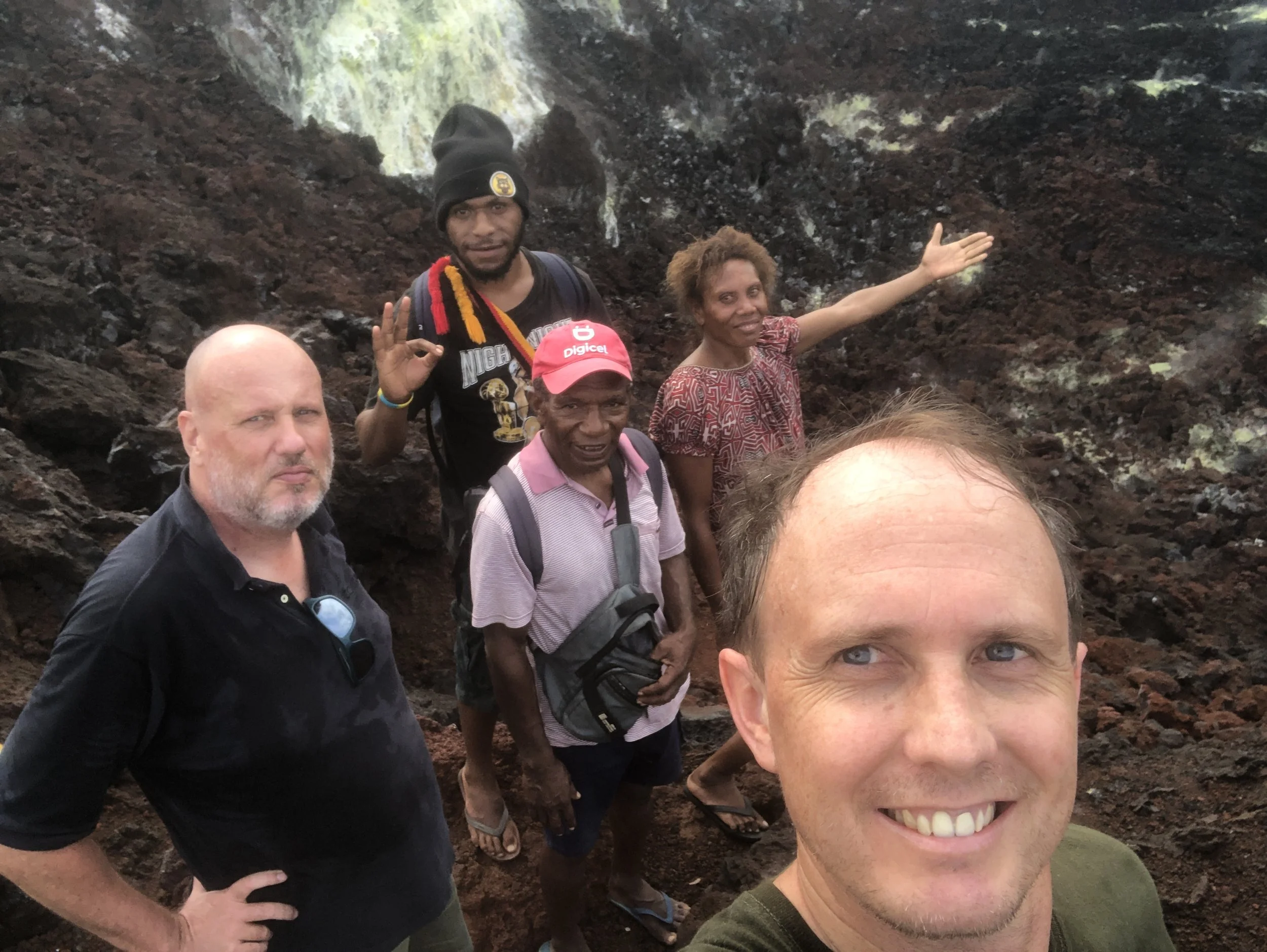
At the edge of the crater with our guides and Pascal, the volcano breathes: smoke, sulfur, and heat rise from its depths, a testament to its mysterious power
In front of us, the crater. Gaping. Smoking. Clouds of gas rising from its depths. The ground is speckled with white traces, which you might mistake for salt at first.
“Sulfur,” says our guide. “The volcano is sweating.”
I step closer, slowly. My heart pounds. Not from fear—but reverence. We’re tiny. Faced with this, we are nothing.
Pascal joins me, short of breath.
“Can you believe this?”
I nod.
“What strikes me,” I say, “is the silence. And those birds... They make me smile. It’s like life and death coexist here, naturally. Makes you think. After the fury of eruption, life always comes back. Always and unfailingly.”
On the way down, we stop in Matupit, the ancestral village of the Tolai—just 1.5 km from the crater. Life, in the shadow of fire.
“They came back after the ’94 eruption,” Jackson explains. “Rebuilt everything. They won’t leave. It’s their land. And their spirit.”
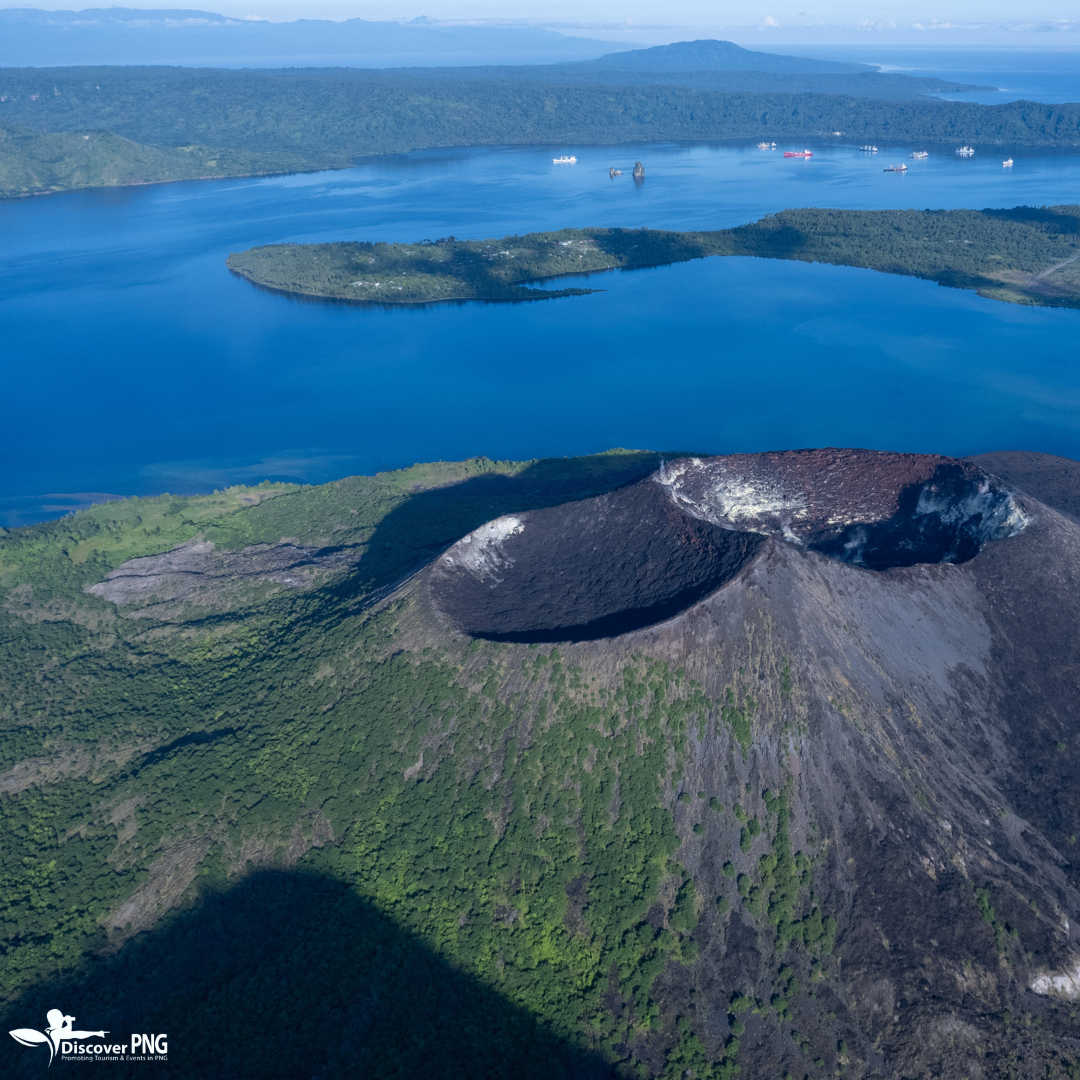
In the middle of the bay lies the village of Matupit, built on this long stretch of land facing the volcano
In the dusty alleys, children wave at us, smiling brightly. Their clothes are dusty, their noses run. But their smiles… their smiles light up the cooled lava.
And I understand. These people, these children, this life—they are living proof that life always reclaims its place, even on the very edge of the abyss.
*Étretat is a stunning coastal village in Normandy, known for its dramatic white cliffs, natural sea arches, and inspiring views over the English Channel.
To continue this immersion into the fascinating traditions of East New Britain, in Papua New Guinea, check out our other article on the Baining and their spectacular Fire ritual: a nighttime journey where young men are tested and strengthened in the heart of the village — click to read! 👆🏻