The Baining Fire Dance: A Rite in the Heart of the Jungle
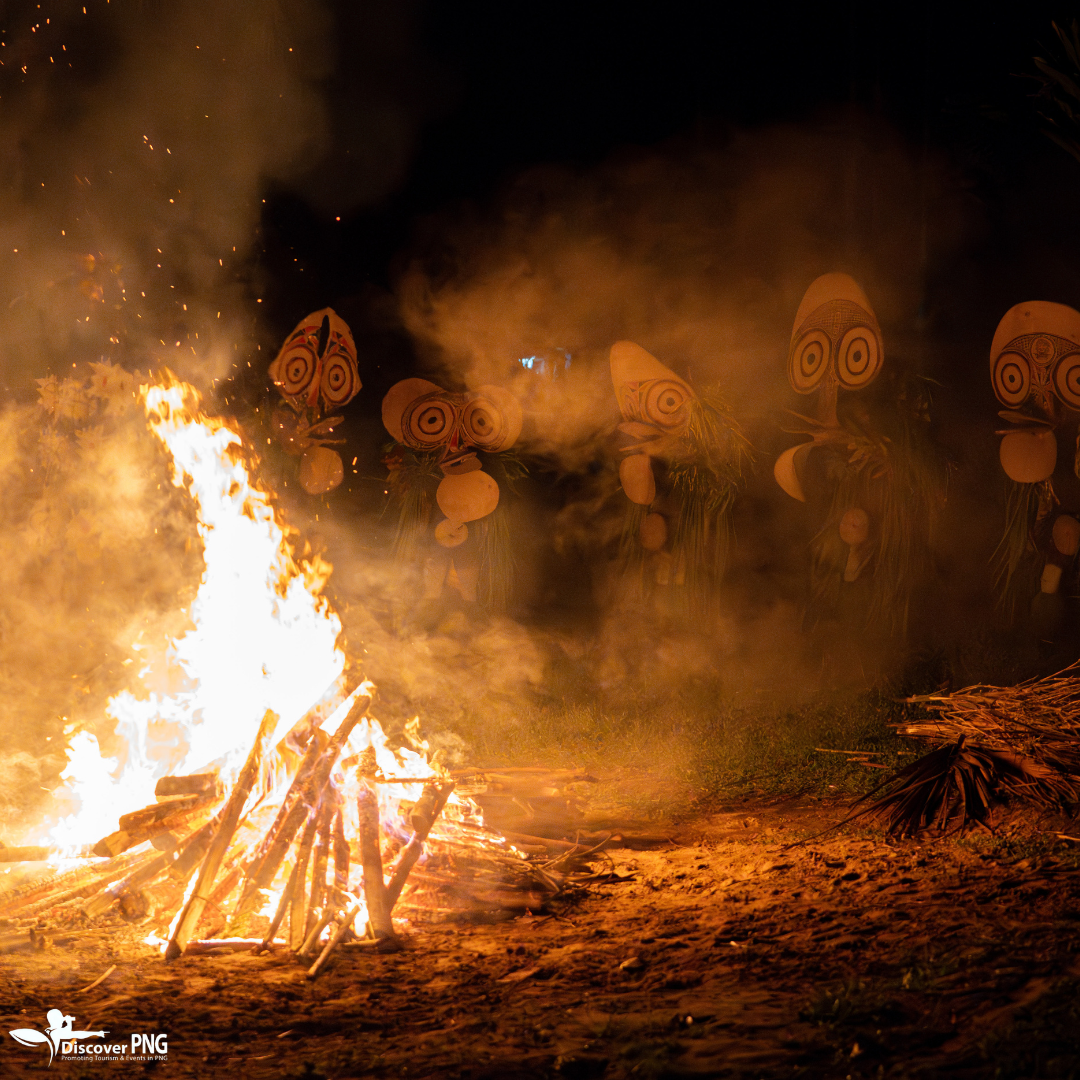
Young men of the tribe ready for the Fire Dance, an ancestral ritual upheld by the Baining people
In the depths of the Gazelle Peninsula’s jungle, the Baining people uphold an ancestral ritual: the Fire Dance. Far from Papua New Guinea’s eastern tourist coasts, this intense and spectacular night ceremony remains, above all, a rite of passage for the tribe’s young men. A rare and moving immersion into a world where fire does not burn, but binds, forges, and transmits.
The track out of Kokopo buckles and jolts immediately. Our 4x4 bounces from one rut to another; the jungle closes in—dense, humid, rustling. Up front, Roger’s brother-in-law floors the accelerator; his headlights carve through a haze of golden-green dust.
— "The Baining were here long before the Tolai came over from New Ireland," he shouts without slowing down. "Pushed into the mountains, they kept the forest—and their secrets."
I exclaim,
— "Looks promising, right? The Fire Dance—usually for initiates only... and we’re front row!"
Roger is Tolai. But he married the Baining chief’s daughter—a precious key. Without that connection, there would be no flame, no dance for curious outsiders like us.
Tourism in Papua New Guinea moves at a warrior’s pace: rare, raw, authentic. Here, ceremonies are not folklore or showpieces; they are heartbeats. The Fire Dance doesn’t aim to impress travelers—it forges men. Rite of passage, funeral vigil, spiritual dialogue: all of that, and more.
We arrive. Total darkness, except for a small fire crackling in a clearing. A swarm of children tussles around enormous bamboo poles, raised like periscopes. We’re seated ten meters from the embers on wobbly plastic chairs. The kids stare at us.
Pascal whispers,
— “Go on, a few words of introduction—it’ll ease the mood.”
We oblige. Then we pester Jackson, our Tolai guide, with questions. He tries to answer while Luis, standing, snaps photo after photo of the crowd on his phone.
The sky is thick with ink. The embers throb. Suddenly, a silhouette steps from the shadows: the chief. He nods. That’s the signal.
Twenty bamboo poles slam rhythmically against a makeshift bench. BOOM‑boom‑boom, a hypnotic vibration. The children freeze, eyes wide. Firekeepers stoke the flames; they rise high, transforming the clearing into an amphitheater of embers.
The first dancer appears behind the blaze, crowned with a monumental kavat mask—over a meter above his head, with giant eyes and a massive beak. White tapa, ochre designs, concentric eyes—a forest spirit ready to devour the night.
His body, coated in cane juice and charcoal, gleams metallic. Thick leaves wrap his shoulders and calves; a penis gourd covered with tapa and circled with a disk conceals the intimate. Jackson murmurs,
— “Everything is made in secret. Women aren’t even allowed to say their names. The dancers fast for weeks.”
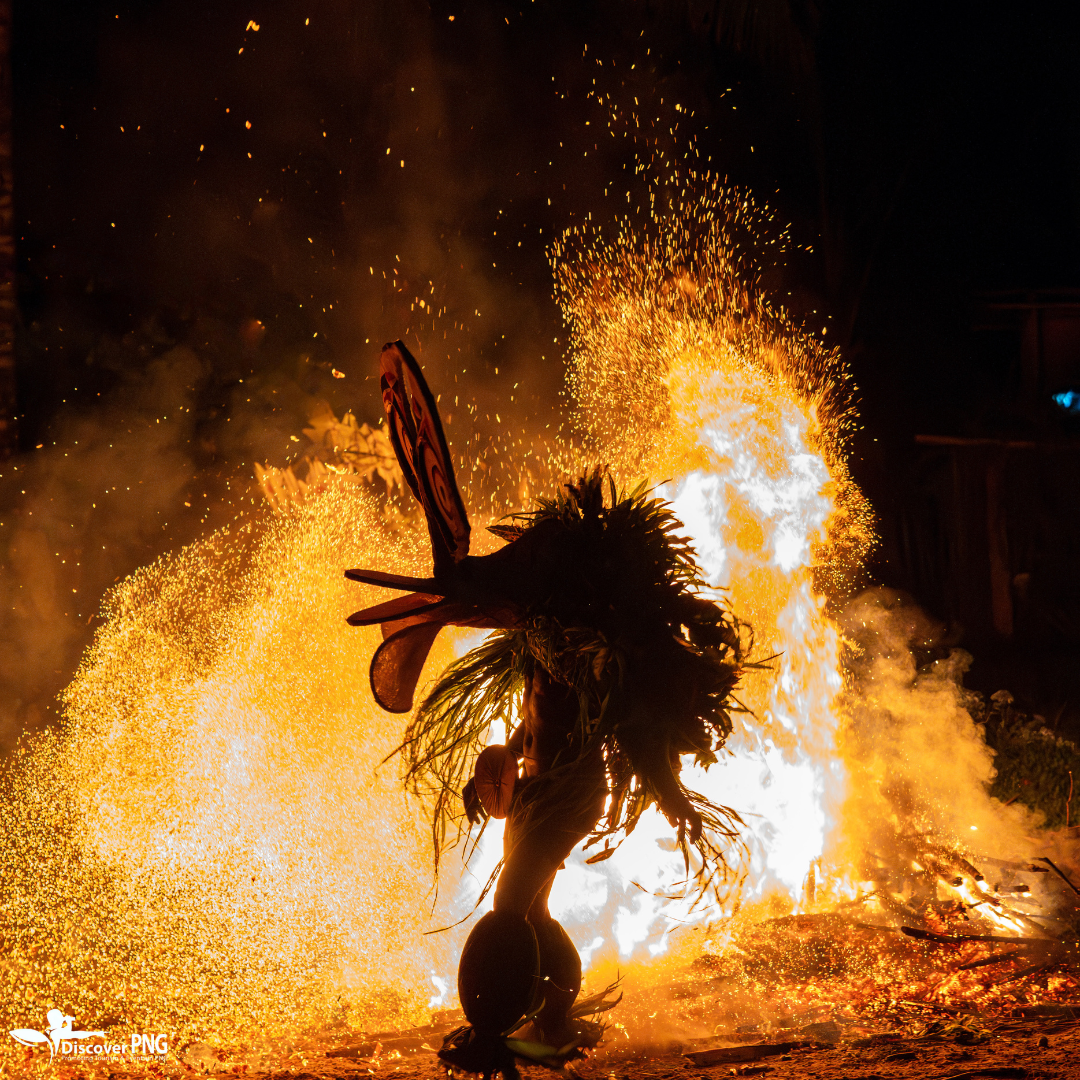
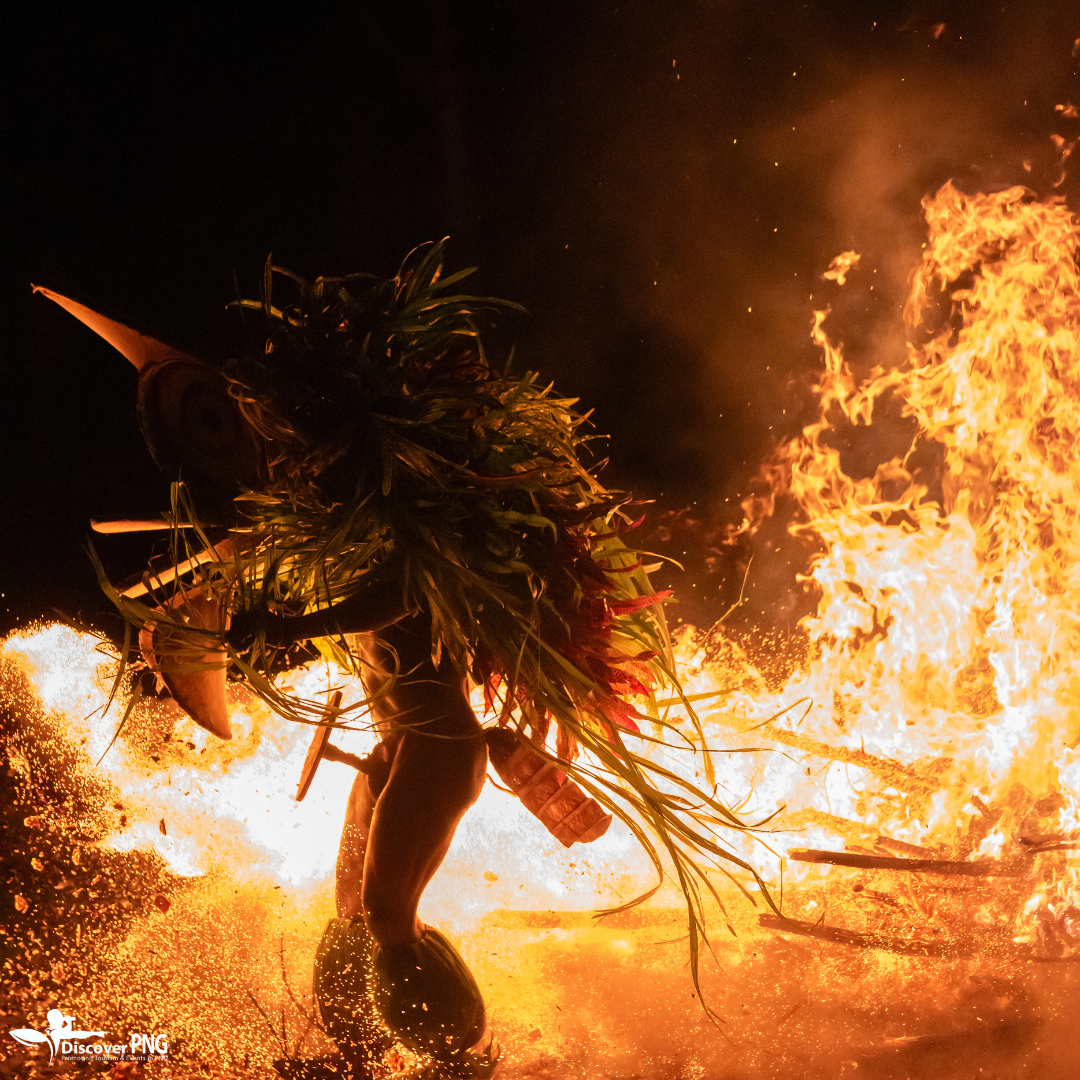
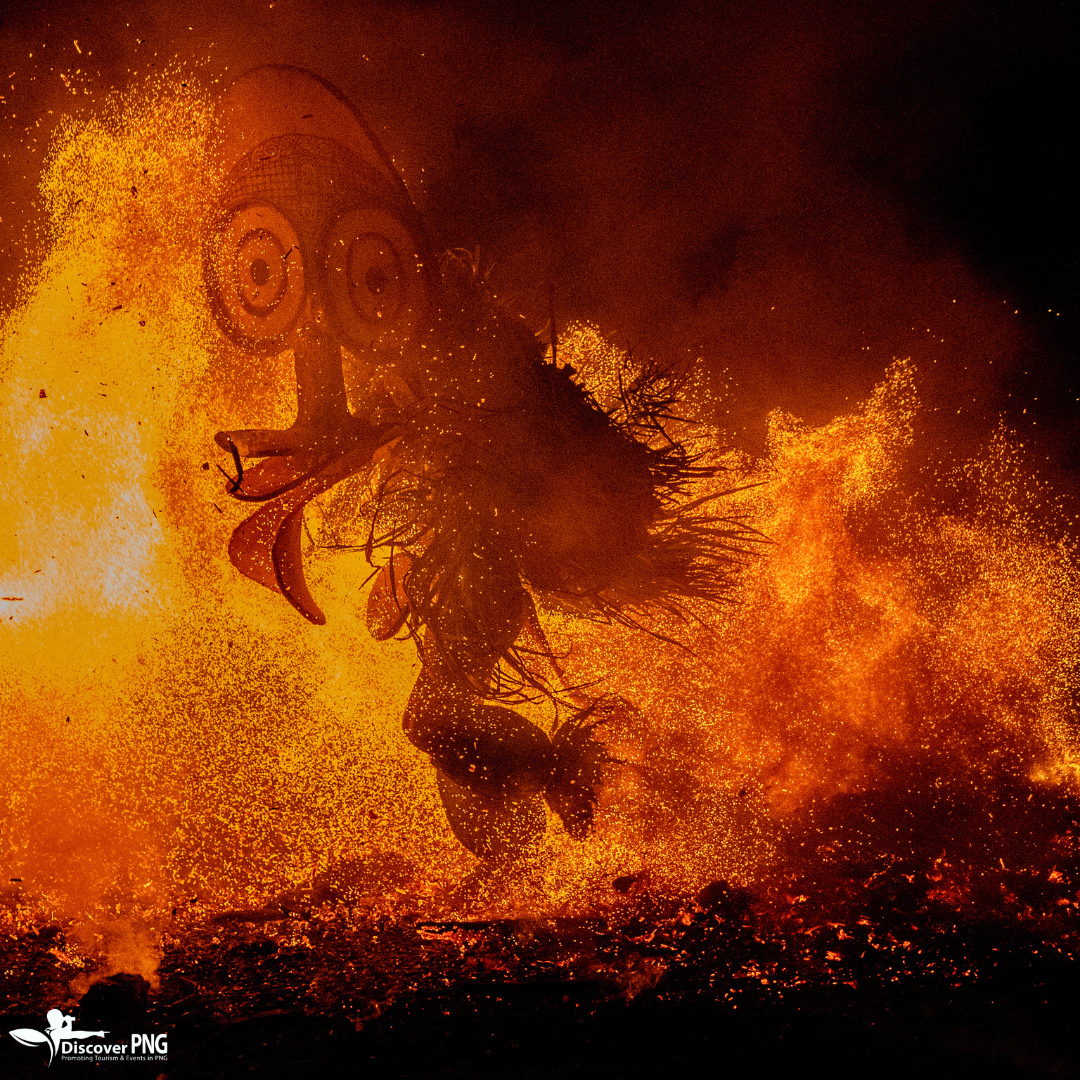
The bamboo drum pulses. The first initiate trots toward the blaze like a footballer before a penalty kick. Suddenly, he kicks a burning log—sparks erupt, rise, and fall onto his bare shoulders. Not a sound. He stomps on the embers, sways, returns to the rhythm.
— “That’s the volcano exploding,” Jackson whispers.
A second dancer sprints in, slams into the fire’s core: WOOOSH! The night bursts with stars. A third misses, tries again, two flaming sticks roll toward our feet. The children leap—barefoot!—grab the embers and toss them back into the fire, laughing, invincible. We take a cautious step back—Western instinct.
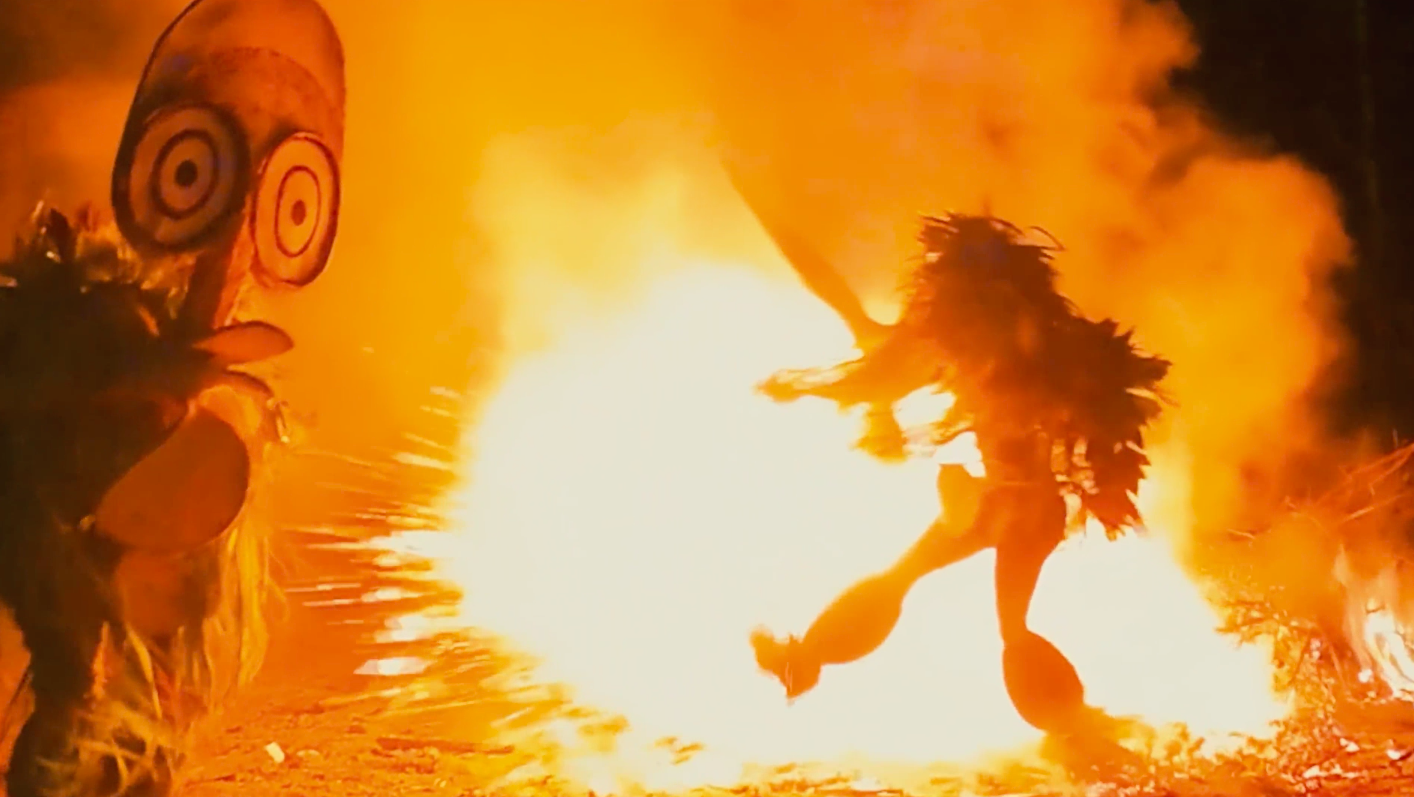
“That’s the volcano exploding”, whispers Jackson, as a dancer plunges into the fire’s core — WOOOSH! The night ignites with a shower of sparks
The masks rotate, each more extravagant than the last. The bamboos hammer their mantra. The air smells of burnt sap, smoked skin, volcanic dust. I think of the elders who imagined this rite: learning fear, then mastering it; suffering together to build belonging. Yes, an initiation—but also a school of courage, a bond of solidarity.
The spectacle lasts for hours, outside of time. But in truth, it’s not a performance. It’s a passage. A transmission. A living bond between generations. These young men don’t dance to impress—they dance to become. They confront pain, fear, and fire—to fully enter their community. So that one day, they too will protect their own, carry memory, support the vulnerable.
I catch myself envying the invisible force that unites them. This ancient, and yet so modern, rite that teaches humility, courage, and belonging. And us—what’s left of our own coming-of-age rituals? Where are our fires?
The bamboo drums still echo. At dawn, the masks will be offered to the flames—returned to the spirits.
There is no curtain call, no applause. Just the moon, the embers, and the feeling of having brushed something profoundly essential.
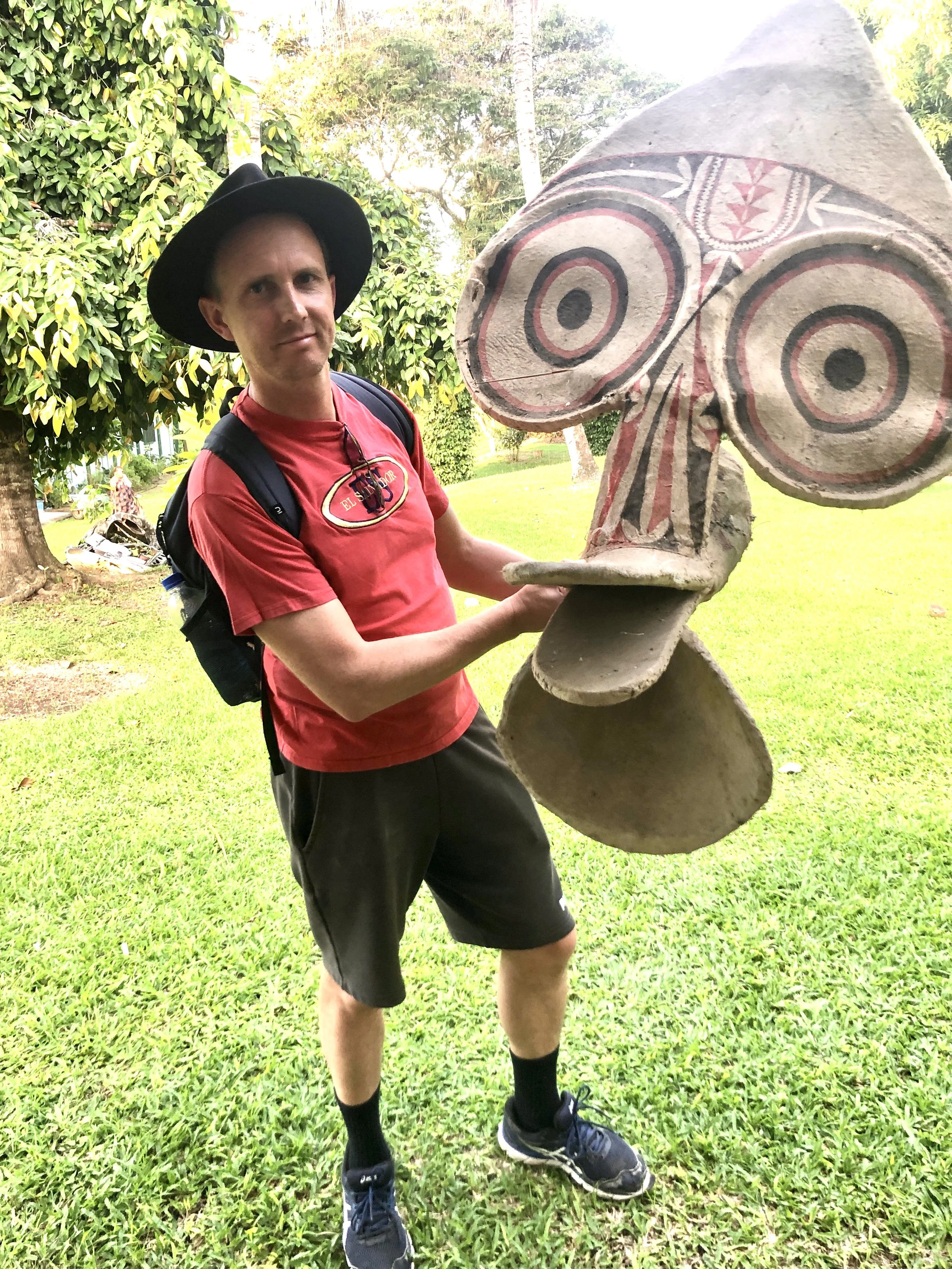
Aymeric with the famous Baining mask, used in the Fire Dance ceremony
To continue this journey into the dramatic landscapes of East New Britain, Papua New Guinea, check out our other article on the ascent of Mount Tavurvur: an unforgettable climb offering breathtaking views of the volcano and its steaming crater — click to read! 👆🏻